Two hours. A clear next step. We cover the cost.
A structured session on where Artificial Intelligence could help your charity, whichever systems you run, what is in scope and what is not, and what to do first. You leave with a direction, and within five working days a written note that sets it out, including “not yet” if that is the answer. Our founder runs every session, so we take a limited number each month.
What happens in the two hours
Step one
Your goals and pressures (30 minutes)
What you are trying to achieve this year, where income and costs are under strain, and what your board and funders are asking about Artificial Intelligence.
Step two
Where the effort goes (40 minutes)
We walk through the work your team does by hand: reporting, admin, data entry, correspondence, case notes. We are looking for time, not technology.
Step three
Your data and your red lines (30 minutes)
What data would be involved, what must never be, the questions your trustees and your data lead will ask, and what the people you support would expect.
Step four
Options and a next step (20 minutes)
The realistic options in plain words and what we would do first, or why we would wait. The note that follows adds the costs and the detail.
Who should be in the room
Someone who owns the decision
A chief executive, director or head of department who can say yes or no. Without them, the session produces a recommendation nobody can act on.
Someone who does the work
A person from fundraising, services or operations who knows where the hours go. They keep the conversation on real work rather than ideas.
Someone who looks after the data
Whoever owns your systems and data protection, in-house or outsourced. They know what you hold, where it lives and what must never go into a tool.
Someone who speaks for governance
A trustee, governance or legal lead, or your safeguarding lead if a use case could touch the people you support. Optional, but it saves a round of questions later.
Three to five people works best. Sessions are held online.
We run it, and we manage the mix
Leadership, operations, technology and governance want different things from the same two hours, and most Artificial Intelligence conversations stall because one of them is missing or unconvinced. We run the session, hold the pen and make sure each leaves with a clear direction. The outputs that keep everyone aligned, and take the risk out of the next step, are named in the note: the use case shortlist, a first data classification and the scope of a version one policy.
Leadership
A decision they can defend to the board and to funders.
Operations
Which hours come back, and what changes day to day.
Technology and data
What connects to what, under what access, written down.
Governance
A first data classification and the scope of a version one policy.
What follows the session
Within five working days you receive a written note. It is yours whatever you decide.
Your use cases, scored for value and risk
The data each use case would and would not touch
A first data classification: what may go into a tool and what never may
What your version one Artificial Intelligence policy must cover
The tool options in plain words: Agentforce, Claude, Microsoft Copilot or not yet
A recommended next step with a price, or a recommendation to wait and what would change that
Who runs it
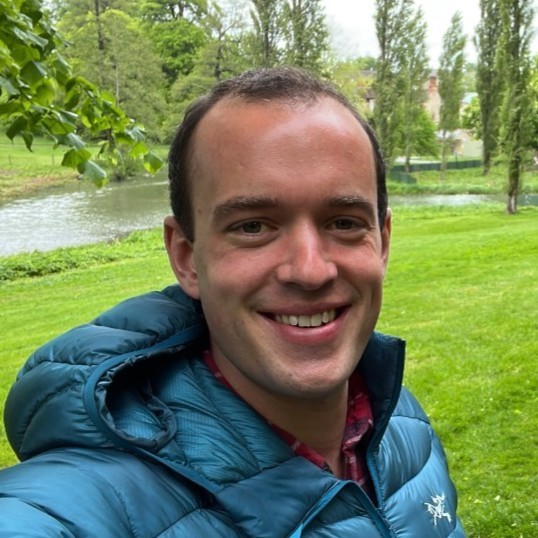
Dan Blackwell
Founder and Chief Executive Officer
Dan leads every Explore session. He has used Artificial Intelligence in his day-to-day work since 2023, and led Cirrico’s adoption of Claude across every part of the business: sales, marketing, finance, delivery and operations. That included writing the policy, setting the security position and connecting it to Salesforce and the other systems Cirrico runs on. He has made the decisions Explore asks you to make, in a small organisation, as the person accountable for how they turn out.
Oxford Artificial Intelligence Programme, Saïd Business School
Salesforce consultant since 2013
Data Protection Officer
Information Security Officer
Why we cover the cost
Artificial Intelligence is the biggest change to how organisations work that we will see in our working lives, and charities have more to gain from it than most. What we see across the sector is fragmented progress: a few people experimenting, a trustee asking questions, and no plan behind either. We cover the cost of Explore because we want the sector we work in to start well, and cost should never be the reason a charity does not start at all.
Explore is still a scoped piece of work: a one-page statement of work, two hours with our founder and a written note. There is no obligation afterwards. If the right next step is paid work, the note says what it is and what it costs, and you can take it or leave it. Our founder runs every session, so we take a limited number each month and ask you to apply.
Frequently asked questions
Is there any obligation afterwards?
Why do we need to apply?
Who is Explore for?
Is there any paperwork?
Do we need to prepare?
We do not use Salesforce. Is Explore still for us?
Apply for an Explore session
Tell us a little about your organisation and we will reply within one working day. Places are limited, and if Explore is not the right fit yet we will say so and suggest what is.